

Beep. Beep. Beep.
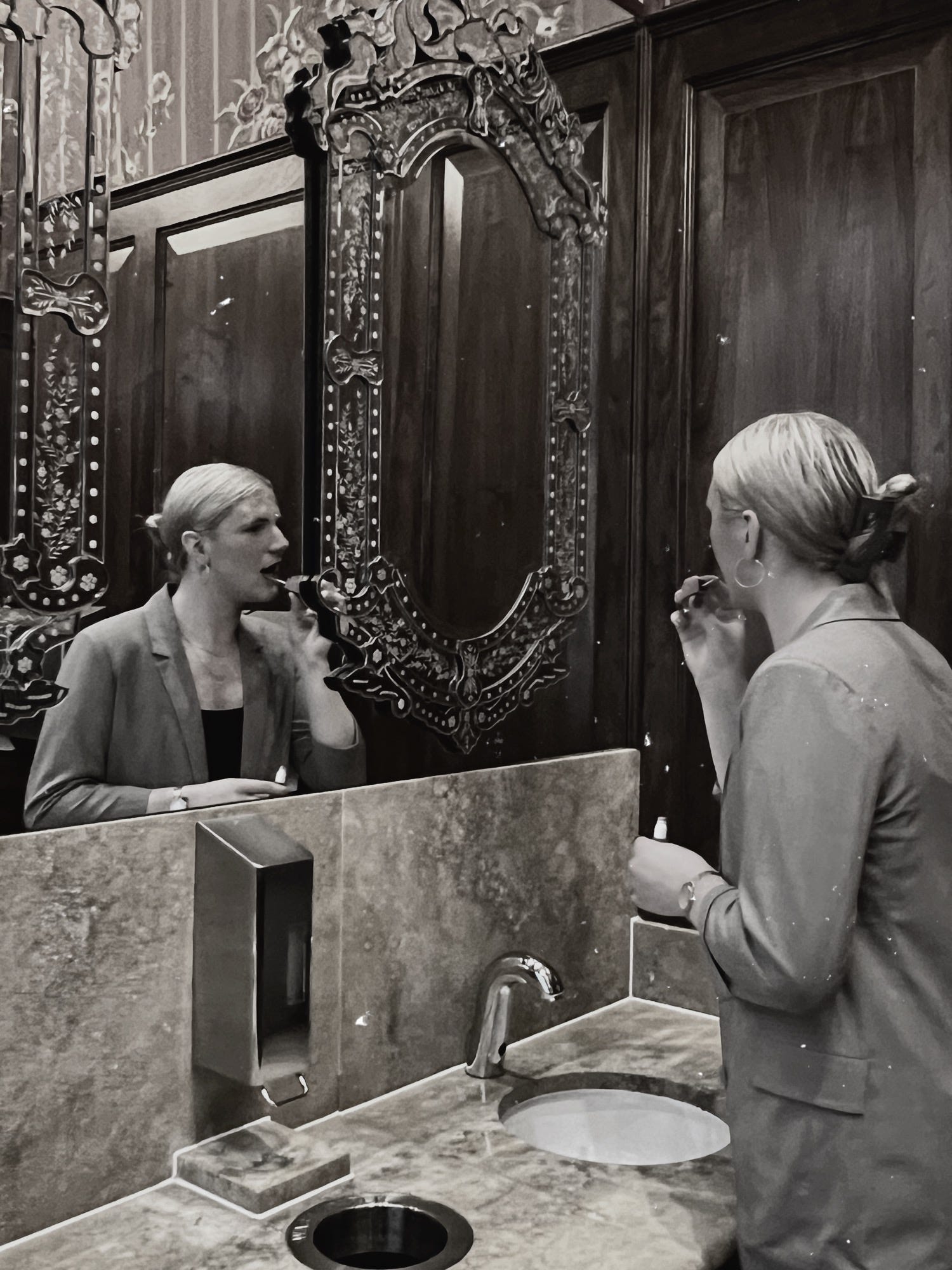
The alarm goes off. I press stop and grab my phone. It’s 4 am. I remove my blanket and, with my eyes barely open, head to the bathroom. I’m blinded by the white overhead light. I am now awake. I grab a towel and drench it in hot water as I prepare my face for my morning routine. As the hot towel warms my face, I prepare my razor. I begin to shave. First with the grain. Then against the grain. I rinse. Double cleanse. Then moisturise. I make my way back to my room to pick out an outfit for the day. Every morning, I have the same thoughts. Do I look masculine in this? Are my shoulders too pronounced? Should I work from home? Eventually, I try to overcome the blaring dysphoria, and I move to apply my makeup. Hide the shadow. Conceal the blemishes and shape the face. I stop for a moment and look back at the reflection in the mirror. I take a deep breath and decide maybe I do look alright. With that, I leave my home and make my way to work. Another morning. Another routine done.
‘‘Dysphoria: the mental state of unease due to the clear mismatch between our ‘gender at birth’ and our real gender.’’
Waking up in the morning. Going to work. Going on a night out. Meeting friends for coffee. These are all regular things I do on a daily basis. However, for many trans people and me, they are met with hurtful and complicated thoughts. Dysphoria: the mental state of unease due to the clear mismatch between our ‘gender at birth’ and our real gender. Describing how dysphoria feels is not something I find easy. It is a personal and profound emotion that exists throughout my life and probably will until my final days. Does it get easier? Yes, it does. Does it still hurt? Yes, it does.
When you talk to a trans person about dysphoria, more often than not, they will have a particular event or thing that triggers these thoughts. For me, it is going to work. I have worked in multiple jobs, in two different countries, as myself over the past four years. But, for some reason, it never gets easier. I worry about what my colleagues may think or how I may be treated. I panic if I don’t look ‘feminine’ enough or act a certain way. When I use the restroom, I rush in, rush out and hope no one says anything or sees me. This is how my brain operates.
‘‘My colleagues respect me for me. I am not misgendered. I am not confronted. I am treated like every other woman there.’’
In reality, over the past several months, I have learned that these thoughts are unfounded and without any real basis. My colleagues respect me for me. I am not misgendered. I am not confronted. I am treated like every other woman there. These more positive experiences have begun a process of altering the way I think.
Now, it is important to stress that dysphoria is not logical. It is a horrible feeling of disgust, anxiety and sadness. It is, however, something I try very hard to overcome. It is the positive moments that help me to realise that these thoughts are indeed not based in reality. They are, instead, thoughts that I need to understand will pop up, but my reality and my experience trump whatever negative words or feelings that enter my head.
Four years after publicly coming out, I am still overcome with happiness when I am gendered correctly, called my name or complimented on my makeup or clothes. It is these moments that help alter the way I think about myself.
In my head, I know I am a girl, and I know that by transitioning, I saved my life. I know that my life is better every day I live as my authentic self. It is not the approval of others that quashes my dysphoria, but it is my own internal recognition that I am me that usurps my dysphoric thoughts. Sometimes, hearing my name said back to me is enough to change the course of my day for the better.
‘‘In my head, I know I am a girl, and I know that by transitioning, I saved my life. I know that my life is better every day I live as my authentic self.’’
It is little things like this that are not talked about when the trans experience is discussed. Whether that be by trans people themselves or others. Dysphoria and the impact it has on trans people is often swept under the rug to avoid causing discomfort to others. Most people will never understand the realities of what it is like to live as a trans person. Most won’t know the second-guessing that takes place day in and day out or the internalised transphobia that takes years to dismantle.
Dysphoria is a challenge. It is a hurdle that trans people jump every day. Even with this, trans people don’t stop. We still come out. We still overcome the odds of survival. We still walk the streets, walk the office halls and live amongst our neighbours. We present as the truest version of ourselves and walk with our heads high as we do. Dysphoria is not something that controls us. It is a darkness that we shine a light on in order for ourselves to shine brighter every day.
“We are not what other people say we are. We are who we know ourselves to be, and we are what we love.” - Laverne Cox